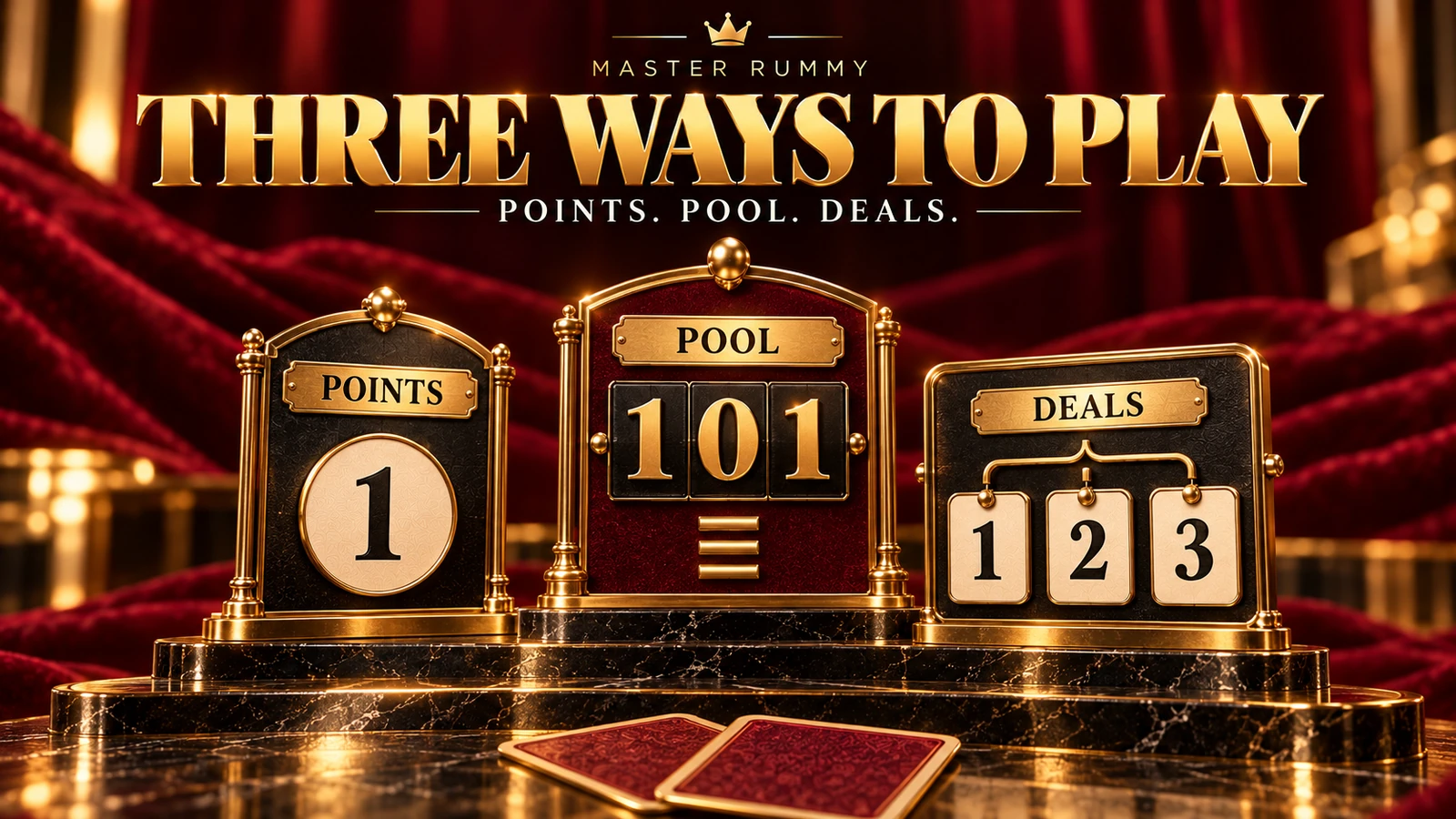
Points Rummy usually settles one deal at a time; Pool Rummy carries penalty totals towards an elimination limit; Deals Rummy compares a running balance after a stated number of deals. The cards can be familiar while the scoreboard means something quite different. Read how the session ends before deciding what a score means.
“I won the last hand, so why am I not first?” That question often comes from mixing up a deal with a whole session. A deal starts with a fresh distribution of cards. A session may contain one deal, a fixed series, or as many deals as it takes to reach an ending condition.
This is a comparison of common 13-card formats, not a list of modes or rewards available in Master Rummy. Our examples use only paper scores—no money, purchases or prizes. For card combinations and valid declarations, use the complete 13-card rules guide.
The difference in one table
Swipe or scroll to read the full table ↔
| Question | Points | Pool | Deals |
|---|---|---|---|
| What is the unit? | An individual deal. | A continuing series with an elimination threshold. | A pre-agreed number of deals. |
| What carries forward? | The deal's result is settled separately; check any wider leaderboard rules. | Cumulative penalty points. | A running score or playing-unit balance. |
| What does a bigger number mean? | Usually a larger penalty for that deal. | Closer to the elimination limit. | Depends on the display: a higher remaining balance can be better. |
| What ends it? | The deal is resolved. | The stated Pool ending conditions are met. | The scheduled deals and any required tie-break are completed. |
Those are the broad distinctions reflected in the operator's published Points, Pool and Deals descriptions. Their detailed penalties and product terms belong to that operator, not this website.
Points: understand this deal before starting another
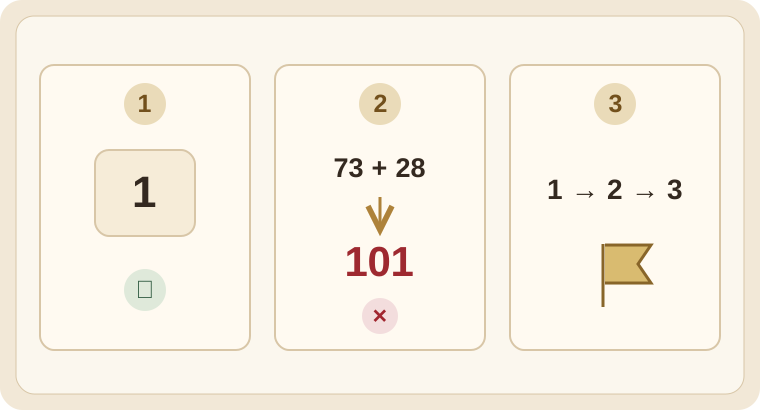
Suppose A makes a valid declaration, and the recorded penalties for B and C are 18 and 32. The result sheet for that deal reads A: 0, B: 18, C: 32. A new deal is not automatically “round two of a 101-Pool session” just because the same players stay seated.
A separate event might keep a leaderboard, but that is an additional rule. Do not invent one from the previous score. The card values, qualifying sequences, drop penalties and score cap still need checking. Our points-reduction guide explains why simply adding isolated cards can be wrong when the required sequences are missing.
Pool: today's hand changes a running total
Here is an invented three-deal ledger. All values below are already-assessed penalties, not raw totals of cards.
Swipe or scroll to read the full table ↔
| Player | Deal 1 | Deal 2 | Deal 3 | Total |
|---|---|---|---|---|
| A | 0 | 28 | 45 | 73 |
| B | 35 | 0 | 40 | 75 |
| C | 25 | 45 | 0 | 70 |
All three remain below 101. If A then receives 28 more, 73 + 28 = 101: reaching the stated threshold triggers elimination under this example's rules. It is not necessary to exceed 101. A 201 threshold changes that boundary; it does not mean every deal has 201 cards or automatically uses the same drop penalties.
Being lowest after three deals does not by itself mean C has already won the session. Other players are still active. Re-entry, split, tie and final-player rules are additional details to read, not assumptions to fill in.
Deals: count the balance, not just the number of wins
For a separate three-deal practice exercise, give A, B and C 200 paper scoring units each. Whenever one player finishes validly, subtract the assessed penalties from the other two balances and add those units to the finisher. This is an illustrative transfer ledger; 200 is not a required starting balance.
Swipe or scroll to read the full table ↔
| Stage | A | B | C |
|---|---|---|---|
| Start | 200 | 200 | 200 |
| A finishes; B gives 18, C gives 32 | 250 | 182 | 168 |
| B finishes; A gives 24, C gives 16 | 226 | 222 | 152 |
| C finishes; A gives 20, B gives 12 | 206 | 210 | 184 |
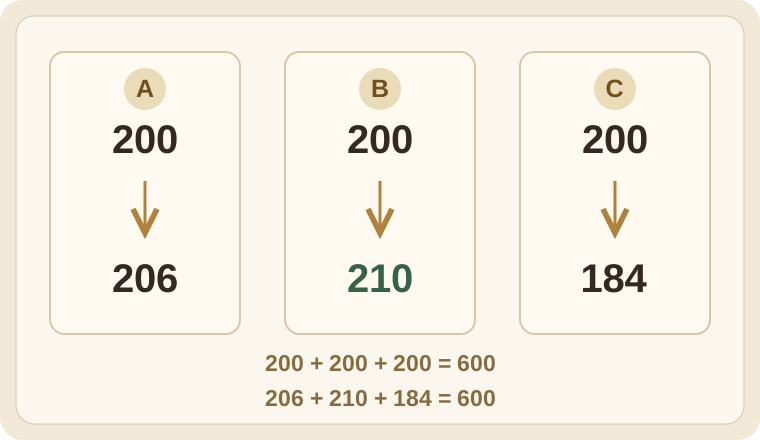
Each player won exactly one deal, yet B finishes first by balance. Calling a three-deal session “best of three” can cause confusion if you assume it means first to two wins. Read the actual settlement rule and any tie-break instruction.
Which format should a beginner practise?
Choose the exercise that matches what you want to learn. A single-deal practice session lets you review one arrangement without carrying a ledger. A Pool exercise teaches you to notice how a penalty changes your remaining distance to a threshold. A fixed-deal exercise makes you distinguish winning a hand from finishing a series well.
None removes the need to form valid groups. Do not let a scoreboard distract you from a missing sequence or a card counted twice. Before starting, check the number of deals or elimination limit, score display direction, drop availability, penalty schedule and session-ending rules. See how drop timing works and a complete hand walkthrough for the next steps.
Quick answers
Is a tournament a fourth scoring format?
A tournament describes event organisation—such as stages, rankings or advancement. It can use a scoring format within that structure. The event rules must explain both; the word “tournament” alone does not tell you how each deal is scored.
Does the higher number always mean a worse result?
No. A cumulative penalty total and a remaining playing-unit balance move in opposite directions. Read the label before comparing two numbers, especially when switching between Pool and Deals.