Use this page for a short answer, then open the linked guide for examples. These 25 questions are grouped by the decision you are trying to make. They describe the teaching conventions used in our guides, not a promise that every table or app variant uses identical rules.
Find your question in the page contents: 1–5 basics; 6–10 sequences and jokers; 11–15 declarations and turns; 16–20 points and formats; 21–25 practice and scope. The illustrations are teaching aids, not app screenshots.
Basics and the starting hand · 1–5
1. How many cards am I trying to arrange?
The final arrangement covers 13 physical cards. On an ordinary turn, drawing creates a temporary 14-card hand before you discard. Do not confuse that extra card with a completed declaration. Complete rules.
2. How should I sort a mixed starting hand?
Separate suits, read ranks in order, then look for useful same-rank groups. Sorting makes relationships visible; it does not turn an unfinished connection into a valid group. Card arrangement.
3. What is the difference between a sequence and a set?
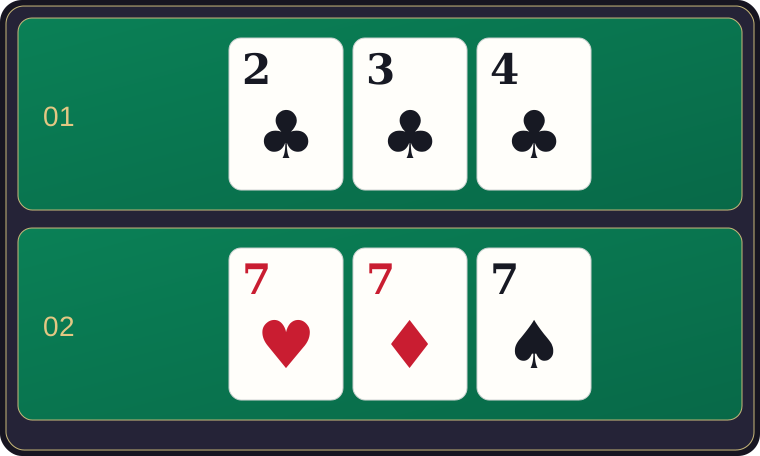
A sequence follows consecutive ranks in one suit. A natural set matches a rank across different suits. Read both rank and suit; red or black colour alone is not enough. Sets versus sequences.
4. How long must a pure sequence be?
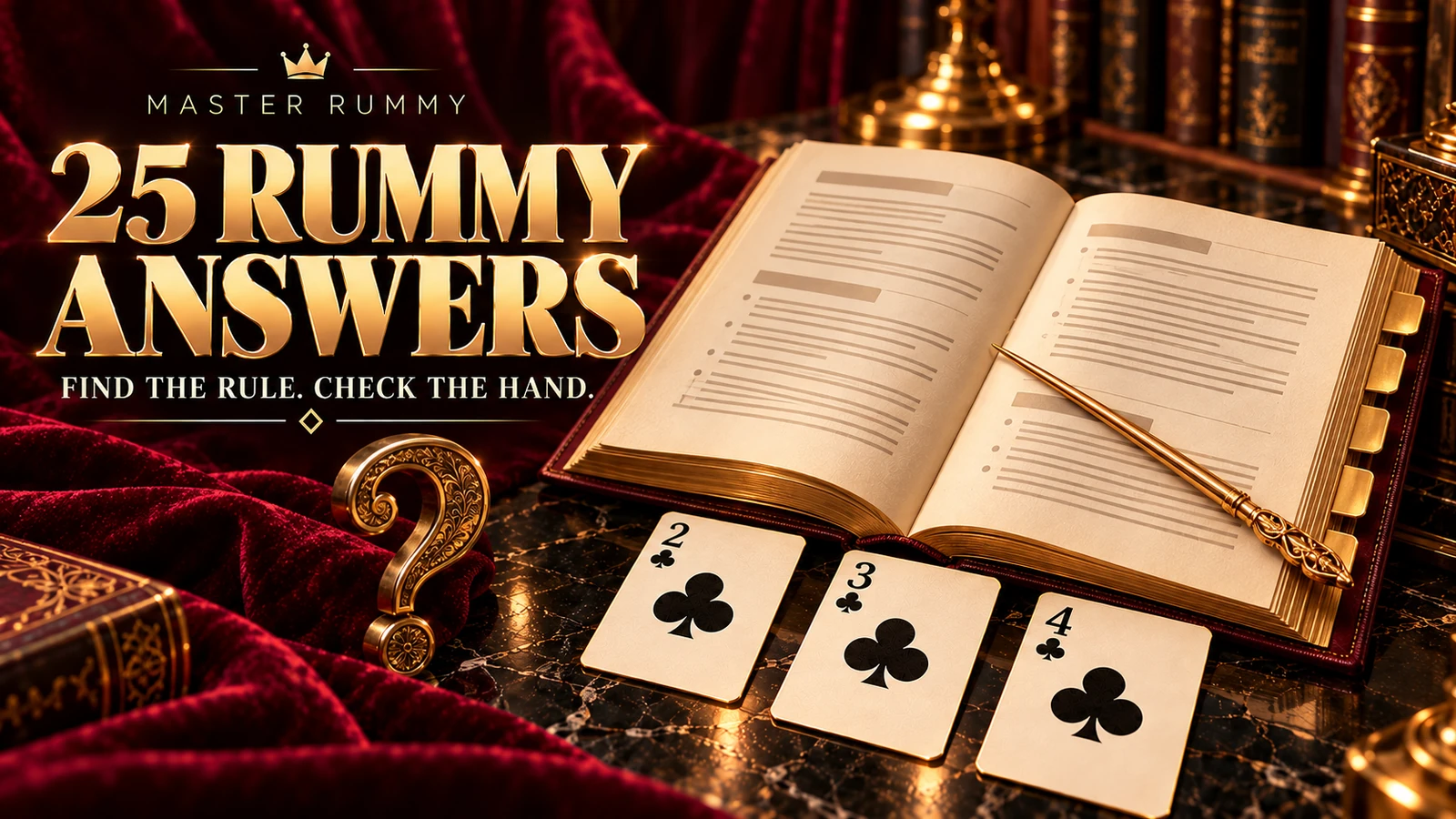
At least three consecutive cards of one suit, with no joker substituting for a missing card. For example, 2♣ 3♣ 4♣ is a natural sequence; 2♣ 4♣ alone is only a connection. Build a pure sequence.
5. What should I examine before the first draw?
Name completed groups, unfinished connections and isolated cards. Keep a plan, not a fixed discard chosen before seeing the real draw. Different starting hands call for different priorities. Four starting hands.
Sequences, jokers and card identity · 6–10
6. What should a beginner focus on first?
Make the checks repeatable: identify a genuine pure sequence, count the cards and notice unfinished groups. Speed can wait until you can explain why an arrangement works. Beginner tips.
7. Are printed and wild jokers the same thing?
A printed joker is its own card. A nominated wild rank makes cards of that rank potential substitutes. Check the current indicator rather than assuming the previous hand's wild rank still applies. Joker roles.
8. Can a wild-rank card appear naturally in a pure sequence?
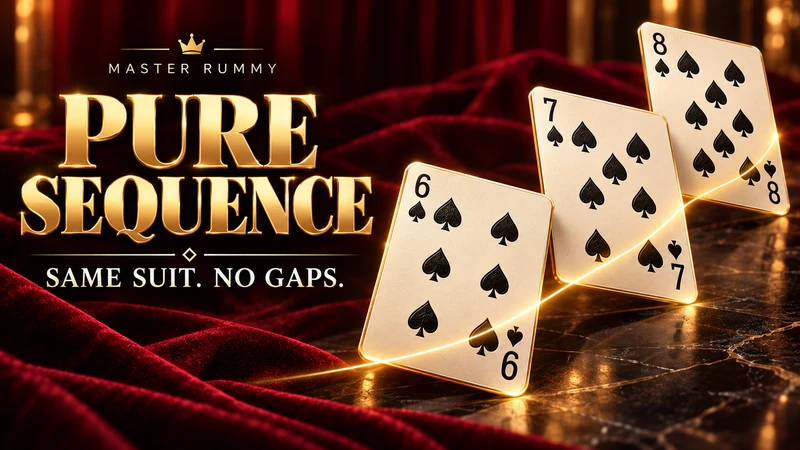
Under the convention used in our guides, yes: if sevens are wild, 6♥ 7♥ 8♥ uses 7♥ in its own position. It is not replacing a missing card. Confirm the convention at your table. Natural versus substitute use.
9. Can two identical copies make a set?
Different physical copies are not different suits. In the standard set examples here, two natural 9♦ cards cannot occupy two suit positions in the same set. They may have separate jobs elsewhere. Duplicate cards.
10. Can an ace connect both ends of the rank order?
An ace may be low in A–2–3 or high in Q–K–A, using one suit. It cannot wrap the sequence through K–A–2. Choose one end, not both at once. Ace examples.
Declarations and the turn · 11–15
11. Can one card help two groups at the same time?
Not in the final arrangement. You can compare alternative plans, but each physical card must have one place. Moving a card means checking what you leave behind. Declaration checklist.
12. Does a valid hand always need four groups?
No. Longer sequences can produce a different layout, such as 5 + 5 + 3. Count all 13 cards and check the requirements instead of rejecting an unfamiliar number of rows. Six complete-hand exercises.
13. Is one pure sequence enough to declare?
No. The common structure also needs another sequence, and every remaining card must fit a valid group. One good part cannot stand in for a complete-hand check. Whole-hand strategy.
14. What is the open deck versus the closed deck?
The open pile shows discarded cards; the closed stock hides the next card. Compare what you can actually see with your hand's needs. Do not treat an unseen card as a promised draw. Draw-source decisions.
15. Which card should I discard?
Compare roles after the draw: completed groups, useful connections, isolated cards and what has been exposed. “Always discard the highest card” is too crude to replace that check. Choosing a discard.
Points, formats and decisions · 16–20
16. Does reducing points mean dropping every high card?
No. A high card may complete a useful group, while a low card may be isolated. Compare exposure with structure under the table's scoring rules; do not improve one number by overlooking the hand. Reducing point exposure.
17. Why can my total differ from a quick mental sum?
First check which cards count, the joker designation and the table's scoring conditions. Adding every visible rank without those checks can answer a different question from the one being scored. Worked scoring examples.
18. Are drop penalties identical everywhere?
No. Timing, format and the stated table rules matter. Read the actual drop conditions before acting; a number remembered from another game is not a reliable instruction. Drop-rule differences.
19. Are Points, Pool and Deals interchangeable names?
No. They describe different ways of organizing play and tracking results. Learning those terms does not establish which formats Master Rummy currently offers. Format comparison.
20. Can a strategy guarantee the next card or a result?
No. A plan can organize choices, but it cannot control unseen cards or opponents. Use specific reasons for a decision, not a promise that one trick always works. 13-card planning.
Practice, events and scope · 21–25
21. What should an experienced player review?
Choose a decision you can reconstruct: what was visible, what alternatives existed and why you chose one. Judge the decision with that information, not only with the eventual result. Reviewing decisions.
22. How can I practise away from the app?
Use paper cards or written hands: sort them, label a joker's role and explain whether all cards are covered. Repeat the check before making it faster. Short practice drills.
23. Do tournament labels tell me the complete event rules?
No. Read the actual entry conditions, format, schedule and result rules. An educational tournament article does not confirm that a particular event exists in Master Rummy or offers a reward. Tournament terminology.
24. Does knowing the rules confirm legal availability?
No. Card rules and legal availability are separate questions. A general article is not permission to play in a particular location; check current applicable requirements rather than relying on a slogan. Legal-context reading.
25. Where should I learn to read a Master Rummy table?
Use the owner-supplied examples in the first-game guide, then compare them with the current app. Labels, ticks and a displayed score do not replace checking every physical card. Reading the table.
About these short answers
The linked guides contain the longer explanations and original exercises. For external rule comparison, consult Pagat's Indian Rummy account and RummyCircle's official rules; their variant-specific rules and commercial features are not Master Rummy claims.
Master Rummy offers recharge and paid purchases, not cash withdrawals or cash rewards. For product questions rather than card rules, use official support.